
A new program for high school students, launching for the 2026-2027 school year.
The new program represents a significant expansion of Ensign Peak Academy’s academic offerings, bridging a rigorous college-preparatory foundation with practical, skills-based education in the school’s established virtual, gospel-centered environment. Designed to serve both current students and newly enrolling families, the CTE pathway gives high school students access to career-focused coursework, industry-recognized certification preparation, and structured support for securing local internship placements — all within a framework rooted in the principles of stewardship, service, and self-reliance.
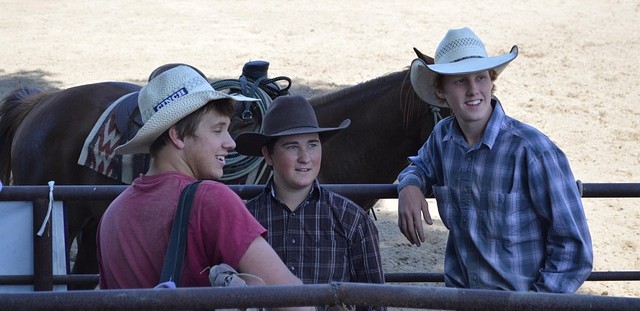

“We believe that a truly complete education prepares students not just for college, but for life — for their families, their communities, and their callings,” said Avalie Muhlestein, High School Counselor for Ensign Peak Academy. “The CTE pathway is our commitment to equipping every student with the tools they need to raise their personal ensign to the nations.”
Program highlights include:
- Career pathway courses across multiple CTE areas including Business, Health Sciences, Information Technology, and Applied Trades
- A Biology: Agricultural Science & Technology course aligned with USBE core science standards
- Business Communications 1, preparing students for professional correspondence, technical writing, and career portfolio development
- Authentic, AI-resistant assessments and real-world project-based learning
- Individualized CTE mentorship and career pathway navigation
- A virtual delivery model through Canvas LMS, accessible to students throughout Utah and beyond

The CTE pathway is designed to grow with students over multiple years, culminating in concentrator completion and industry certification preparation for upper-level participants. Ensign Peak Academy’s gospel-centered approach ensures that career preparation is always framed within a larger vision of purposeful, servant-hearted living.

Enrollment for Fall 2026 is now open. Families interested in learning more about the new CTE program are encouraged to contact Mrs. Muhlestein, counseling@ensignpeakacademy.com, 801-885-7922

Career Paths
We will assist you in selecting one of these career paths to suit your interests:
- Architecture, Construction, & Automotive
- Agriculture, Food, & Natural Resources
- Health Science
- Information Technology & Computer Science
- Education & Training
- Human Services & Humanities
- Personal Services
- Arts, Audio/Visual Tech, & Communications
- STEM & Manufacturing
- Business, Finance, & Marketing
- Law, Public Safety, Corrections, & Security

CTE Application
Enrollment is closed for the 2026-2027 school year due to reaching capacity. If you would like to be informed of an opening due to student withdrawal, please submit this waitlist form:
Ensign Peak Academy CTE Program Waitlist
CTE High School Graduation
24 Credits Required
We recommend that you meet with our high school counselor to assist you in planning your path to graduation.
This matrix demonstrates how a student enrolled in the CTE Pathway satisfies the core and elective graduation requirements of Ensign Peak Academy by substituting or enhancing traditional tracks with applied, real-world alternatives.
English Language Arts (4.0 Credits Required)
The CTE pathway replaces traditional composition tracks with professional communication, executive literature, and organizational writing. Students may also select from current English and Literature offerings.
- 2026-27: Business Communications A (1.0 Credit) — Professional writing and digital correspondence.
- 2027-28: Business Communications B (1.0 Credit) — Project-based business formatting integrated with Microsoft applications.
- 2028-29: Literature of Leadership (1.0 Credit) — Advanced analytical reading, text dissection, and character-driven leadership extraction.
- 2029-30: Literature of Management (1.0 Credit) — Literature focused on self-stewardship, task organization, and team leadership.
Mathematics (3.0 Credits Required)
- Core Math: Algebra / Geometry Track (2.0 Credits) — Current School Offerings.
- Applied Math: Math for Business (2027-2028) / Applied Math 2 (1.0 Credit) — Real-world calculations, corporate metrics, and personal finance. (2028-2029)
Science (3.0 Credits Required)
Fulfills state and USBE requirements by pairing core baseline laboratory concepts with an applied third-year technical science module.
- Core Science: Foundational Core Science Track (2.0 Credits Required per USBE) — new Biology: Applied Life Science and Professional Tech, and Current School Offerings (e.g., Earth Science, Biology, Chemistry, Physics)
- Applied Science: Applied Science Course (1.0 Credit) — Career-centric laboratory, environmental, or industry-focused scientific execution. (2028-2029)
Social Studies (4.0 Credits Required, American History and US Government & Citizenship courses required)
- Foundational History: US History, Government, and Civics tracks (2.0 Credits) — Current School Offerings.
- Applied History: History of Labor and Technology (1.0 Credit) — Contextual historical analysis of industry, technology, and economic evolution. (2029-2030)

Financial Literacy (0.5 Credit Required)
- Financial Literacy: Financial Literacy (0.5 Credit) — Personal and family fiscal stewardship.
Digital Studies (0.5 Credit Required)
- Digital Studies: “Choose Your Own Adventure” Hybrid Course or Standalone BOS (0.5 Credit) — Comprehensive training across the 4 USBE strands, culminating in official Microsoft Office Specialist (MOS) Certifications. (2029-2030)
Health & PE (2 Credits Required)
- Health & Wellness: Health and PE Courses (1.0 Credit) — Personal wellness, health, fitness courses.
CTE Core, Applied Electives & Internships (4.0 Credits Required, CTE Foundations or Concentrator course required. As many as 7 Credits to complete graduation requirements)
- CTE Foundations: Foundations of Independence (1.0 Credit) — Technical exploration, life literacy, and career planning. (2026-2027)
- CTE Concentrator Track: (1.0 credit, repeatable up to 3.0 credits) — Targeted trade, business, or industry-specific depth modules. Students select areas of interest and develop a knowledge base in the CTE strand of interest. Industry certification exam prep available as part of the course curriculum. Industry certifications exams are not included in tuition. ACT Prep modules offered in this course. (2026-2027)
- CTE Internship: (0.5 to 1.0 credits, repeatable up to 2.0 credits) — Student-sourced local work experience and workplace mentorship for school credit. 80 hours per semester of documented on-the-job experience equals 0.5 credits. Work experience must be directly related to a career goal. (2027-2028)
- Family Science: (1.0 Credit)–Applied course that may be used toward CTE requirement for all strands. Focus on communication, stress, and social issues.
- Entrepreneurship: (1.0 Credit)– Consider the risks and rewards or business ownership. Learn the best processes for identifying a business opportunity. Give attention to the possibility of becoming a craftsman and going into the trades, as an entrepreneur. Explore the types of education and preparation needed to succeed in various types of businesses.
- Life Skills: (0.5 Credit)–Students will learn principles and strategies for prioritizing values and goals, along with effective time management, problem solving and decision making techniques.
- College & Career Prep: (0.5 Credit) –This course presents thoughtfully selected strategies to help youth explore and compare options, and then analyze and plan for their future career.
- SIM Week: (0.25 Credit, repeatable)–Applied communication, negotiation and business/legal skills in a week-long summer simulation. Students learn and apply teamwork, communication and negotiation skills that can be applied in careers.
Electives (for remaining credits to add to 24)
- General Electives: (Remaining Credits) — Curated from existing scriptural, seminar, or fine arts offerings (e.g., Holy Land Scripture Series, Honors, etc).
2026-2027 CTE Course Descriptions
Business Communications A
2-semester course, 1 credit
This course fulfills a core English graduation requirement and serves as a foundation for all Career and Technical Education (CTE) pathways.
Communication is one of the most powerful tools students have to serve others, lead with integrity, and build a successful future. This course provides a specialized focus on the professional writing and communication skills that employers value most. Students use their specific career interests to master the art of professional expression. By the end of this course, students will possess a professional portfolio that demonstrates their readiness to enter the workforce, secure an internship, and lead with confidence.
Part 1: Building a Professional Foundation Students learn how to communicate with clarity, honesty, and purpose. They explore what it means to carry themselves as professionals, mastering everything from active listening and workplace etiquette to handling difficult conversations with grace. Students create practical documents tailored to their professional goals: professional emails to suppliers, step-by-step instruction guides for a specific trade, and persuasive proposals for necessary resources. By the end of this semester, students will have built a “Mastery Folder” of professional artifacts that demonstrate their ability to think clearly and write with precision.
Part 2: Career Readiness & Leadership Students take their skills to the next level by mastering the digital and leadership tools required in today’s world. They learn how to use spreadsheets to manage real-world projects, design professional marketing materials, and protect digital data. Students also build a personal brand—crafting a stand-out resume, writing targeted cover letters, and perfecting an “elevator pitch” that helps them connect with local mentors in their communities. Whether students are preparing for their first job or their first internship, they will finish the year with a clear five-year vision for their future and the communication skills to make it happen.
Foundations of Independence
2-semester course, 1 credit
This course serves as the introductory launchpad for the Career and Technical Education (CTE) pathway, offering students a broad, hands-on exploration of diverse career possibilities.
In a world that increasingly values practical capability, this course invites students to connect their academic learning to the responsibilities of adult life. By exploring the 11 global CTE career clusters, students gain exposure to a wide variety of industries while mastering the essential “life literacy” skills needed for personal stewardship and self-reliance. This course complements the broader liberal arts curriculum by ensuring that every student leaves with a functional understanding of how to maintain a home, manage professional resources, and think like a specialist in fields ranging from engineering to healthcare.
Part 1: Discovering Systems & Scientific Literacy Students begin their journey by “lifting the hood” on the systems that support modern life. Through immersive, project-based units, students rotate through diverse strands—investigating home and automotive maintenance, animal and agricultural science, clinical health observations, and network security. Rather than simply reading about these fields, students perform tangible audits and experiments, such as conducting a “Safety 5” vehicle check, mapping a home network, or monitoring soil germination. By applying technical principles to their own environments, students develop a baseline of practical knowledge that builds both confidence and a sense of ownership over their daily surroundings.
Part 2: Creative Problem-Solving & Professional Growth As students progress, they shift their focus toward the professional and creative applications of these career strands. They learn to apply the engineering design process, utilize graphic design principles for professional branding, and develop the logical systems required for complex problem-solving. Through assignments that mirror real-world professional tasks—such as teaching a new skill, creating a business pitch, or designing an emergency safety protocol—students sharpen their ability to observe, analyze, and implement solutions. By the end of this course, students will have explored a wide spectrum of career interests and developed the core competencies necessary to step into their future with a spirit of independence and a deep understanding of their capacity to contribute to their families and communities.
CTE Concentrator
2-semester course, 1 credit (Repeatable)
This course provides a tailored, immersive experience for students ready to move from general exploration into focused skill development.
Whether students are already tracking toward a specific career or are still discovering where their unique talents lie, this course offers a dedicated space to build highly marketable, real-world competencies. By selecting specific industry modules—ranging from technical trades to business leadership—students gain the depth of knowledge required to excel in the modern economy. Beyond technical skill, this course serves as a workshop for personal excellence, where students master the foundational habits of professional success, including rigorous goal setting, proactive time management, and disciplined task completion.
Part 1: Specialized Depth & Academic Readiness Students select a professional strand that aligns with their interests, or they may choose multiple modules to build a versatile “skill stack” that remains valuable across many industries. During this phase, students engage in deep-dive projects that build the technical knowledge base necessary for success. Simultaneously, the course offers high-level ACT preparation options to ensure college-bound students are equipped for their academic transitions. Throughout this process, students implement structured systems to manage their workflows, ensuring that both project objectives and study goals are met with precision and punctuality.
Part 2: Professional Proficiency & Certification Readiness As students progress, they transition toward mastering the metrics of professional success. This phase of the course prioritizes mastery of industry-specific standards, providing students with the curriculum and support needed to prepare for professional certification exams. Whether a student is pursuing trade certifications, business competencies, or general workplace readiness, they are challenged to think and work like entry-level professionals. By combining rigorous industry training with a continued emphasis on disciplined time management, students finish the year with a robust portfolio of technical knowledge, the ability to self-manage complex goals, and the verified qualifications necessary to pursue their next steps with confidence and clarity.
Biology: Applied Life Science & Professional Technology
2-semester course, 1 credit
This course fulfills a core Science graduation requirement through an applied, multi-career lens.
In an era where technology can often mask the true nature of the physical world, this course invites students to step into the role of a field scientist. By moving beyond abstract textbook definitions, students explore the fundamental principles of biology—cells, genetics, anatomy, and ecosystems—through the practical framework of modern professional science, including veterinary medicine, public health, and biological engineering. This course serves as both a career discovery launcher for those still exploring their path and an advanced training ground for students focused on specialized fields like epidemiology, civil engineering, or resource management. By engaging in rigorous, hands-on inquiry, students develop the professional leadership, public speaking, and financial tracking skills necessary to raise their personal ensign in any industry.
Part 1: The Blueprint of Life & Biological Systems Students begin their journey by uncovering the hidden systems that drive the biological mechanisms of our world. Through a series of hands-on, process-driven labs, students engage directly with the science in their own daily lives—whether that involves analyzing plant growth patterns, mapping local biosecurity, or investigating cellular structures. Instead of passive reading, students conduct real-world experiments, such as performing DNA extractions, documenting metabolic shifts during physical activity, and auditing safety protocols in clinical or industrial settings. Every unit is designed to be fully accessible; students choose from a variety of lab options that utilize simple household items, native outdoor plants, or basic digital tools already available at home. This approach ensures that all students, regardless of their location or resources, can develop a genuine, practical mastery of the material using the tools they have on hand.
Part 2: Ecosystem Dynamics & Professional Stewardship As students progress, they transition from studying internal biological blueprints to analyzing the complex, global systems in which those organisms thrive. Students explore the physics of plant structures, the chemistry of the earth, and the intricate cycles that drive our planetary resources. The course challenges students to apply data to investigate their own communities, research local standards, and manage professional-grade financial ledgers for their independent Industry Capstone projects. By the end of this course, students will have built a comprehensive digital portfolio that bridges the gap between academic theory and real-world application, fully equipping them to step into their future with the technical precision and servant leadership required to impact their families and communities.
Descriptions of courses to be offered in future years will be posted here at a later date.